Markets were under extreme volatility in the week gone by and we had two trading sessions where there were 1,000 point moves on the BSESENSEX and one session where it was double that at 2,000 points. This clearly shows the vulnerability of markets and the urgent need for them to stabilise. With two sharp down days, one sharp up day and two days where they traded with a positive bias, markets had all the action that one could expect in five trading days. The final result saw BSESENSEX lose 1,789.97 points or 3.52% to close at 49,099.99 points while NIFTY lost 452.60 points or 3.02% to close at 14,529.15 points. The broader indices saw BSE100, BSE200 and BSE500 lose 2.77%, 2.39% and 2.05% respectively. BSEMIDCAP lost a mere 0.28% while BSESMALLCAP was up 1.47%.
In sectoral indices, BSEMETAL gained 7.13% led by Hindalco up 10.40%, Vedanta 8.32% and Tata Steel up 5.56%. The top sectoral loser was BSETECK down 4.03% followed by BSEIT down 4.01%. In individual stocks Kotak Bank was down 8.00% followed by HDFC 7.17% and ITC 5.56%. Tech Mahindra lost 7.61% followed by TCS down 5.73% and Wipro down 4.58%.
The Indian Rupee lost sharply on Friday when indices were down almost 4% and ended the week with losses of 81 paisa or 1.11% at Rs 73.46. Dow Jones after hitting a new life time high at 32,010 points on Wednesday suffered big losses of 560 points and 470 points on Thursday and Friday, to close the week with losses of 561.95 points or 1.78% at 30,932.37 points.
While the four-digit movement on the BSESENSEX of negative 1,155 points on Monday and 1,940 points on Friday interspersed with gains of 1,030 points on Wednesday may have rattled people as big, it amounts to just about 2% and 4%. Nothing very big in that sense but three such days in five is worrisome. It only indicates nervousness and the need for markets to stabilise. The week also had other events which have a bearing on the market going forward in the immediate medium term.
NSE saw a trading glitch on Wednesday and this was the fourth such occasion in three and a half years. This would have serious repercussions on NSE even as they ready to launch their IPO in the coming year. The fact that communication from the exchange on the glitch was not forthcoming, large discount brokers squared of intra-day trades on the BSE and clients suffered huge losses. While the blame game has started and no one is willing to comment or take the blame, NSE is certainly at fault for not conveying that there would be resumption of trade even if trading has to go beyond the stipulated time. One such trading platform singled out for criticism on social media, was India’s largest broker ‘Zerodha’.
The week ahead sees the change in margin norms from the erstwhile 25% to 50%. This effectively means that intra-day traders would have to provide double margins and this could affect trading volumes in the short term as traders get used to the new laws. Further with midcap and Smallcap stocks being largely unaffected in the sharp reversals witnessed last week, they could be under pressure Monday onwards.
February futures expired with big gains for bulls at 15,097.35 points. The series gained 1,279.80 points or 9.26%. Bulk of these gains came in the first week post announcement of union budget. Readers would recall that the high registered on the BSESENSEX was 52,516 points while it was 15,431 points on NIFTY. We have corrected a little over 50% of the gains of February.
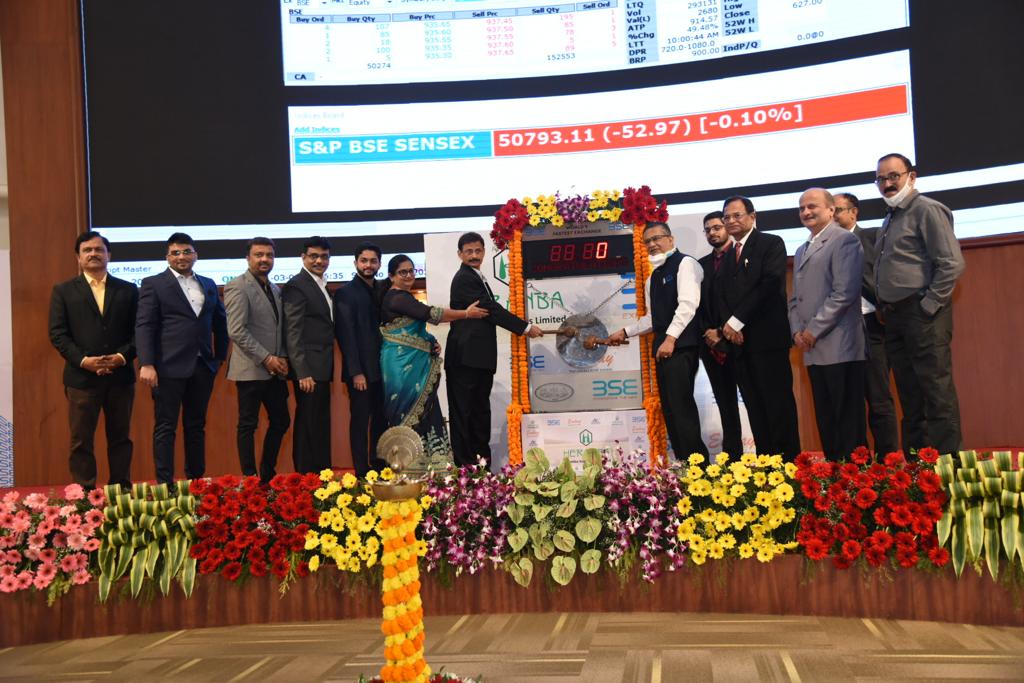
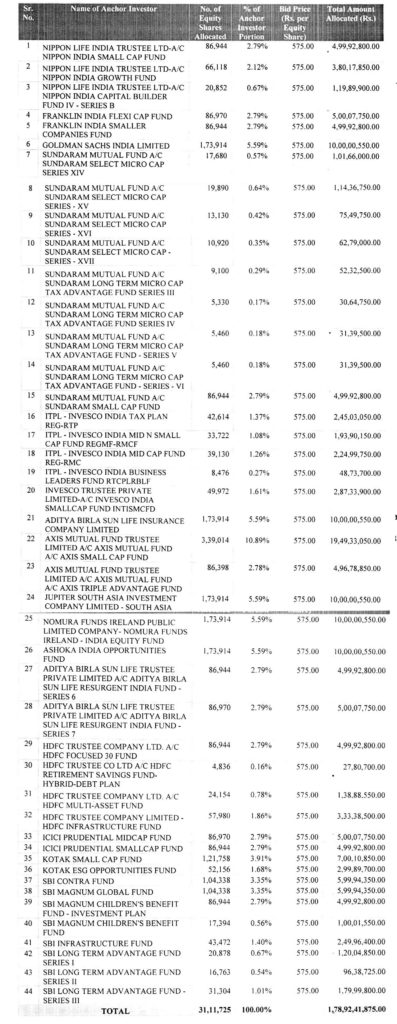
The primary market saw the issue from Heranba Industries Limited get oversubscribed and receive excellent response. The issue was oversubscribed 83.29 times overall. QIB portion was subscribed 67.45 times, HNI portion 271.15 times and Retail portion subscribed 11.84 times. There were 14.55 lac applications in all.
The issue from Nureca Limited listed with shares gaining 66.66% on day one. The company had tapped the capital markets with its issue of 25 lac shares at Rs 400 each. Shares closed day one at Rs 666.65. Shares of Nureca gained further and closed the week at Rs 699.95, a gain of 75%. Shares are in the trade-to-trade category and would continue to remain so for another eight trading sessions.
Shares of RailTel Corporation Limited also listed on the bourses on Friday the 26th of February. The company had tapped the markets through an offer for sale of 871.53 lac shares in a price band of Rs 93-94. Shares at debuted at Rs 104.60 on BSE and Rs 109 on NSE. They closed at Rs 121.40 on BSE and Rs 121.35 on NSE, a gain of Rs 27.40 or 29.15%.
The week ahead sees the issue from MTAR Technologies Limited tapping the capital markets. The company is having a fresh issue of 21.48 lac shares and an offer for sale of 82.24 lac shares in a price band of Rs 574-575. The issue opens on Wednesday the 3rd of March and would close on Friday the 5th of March. The issue would garner about Rs 596 crs. The company is a one stop solution for highly critical and precision engineering products and caters to the Nuclear, Space and Defence and Clean Energy segments. It has been in existence for over 50 years and deals with ISRO, Nuclear Power Corporation, DRDO and Bloom Energy amongst others. It had revenues of Rs 214 crs for the year ended March 2020 and a net profit of Rs 45.5 crs. In the nine months ended December 2020, revenues increased to Rs 176 crs and net profit to Rs 39.6 crs. Because of the nature of the business, the company receives free supply of raw materials from many of its customers and hence the sales quantum looks muted. The EPS of the company was Rs 11.11 for the year ended March 2020 and the PE band is between 51.67 to 51.77 times. There are no comparable players which could be termed as competitors for MTAR and this makes them fairly unique in nature. Getting allotment in this issue of just about 1.03 cr shares is going to be a challenge.
On the covid-19 front the world saw 11,46,77,153 patients, 25,43,014 deaths and 9,02,32,648 patients recovering. In India we saw 1,11,12,056 patients, 1,57,195 deaths and 1,07,84,568 patients recovering. During the week, the world saw 29,05,449 new patients, 68,600 deaths and 33,11,761 patients recovering. In India we saw 1,14,235 new patients, 819 deaths and 90,375 patients recovering. Very clearly the number new patients in India have spiked and one needs to exercise extreme caution in maintaining social distance.
Markets will continue to remain volatile and trade with a negative bias at least in the earlier part of the week if not more. An analogy which comes to mind is the aftershocks one experiences after a powerful earthquake has hit an area. Similarly, what we saw during the week could be taken as an example and we would have to brace with the aftershocks and the resultant volatility. The strategy would be to use rallies to reduce positions and exposure and use sharp dips to make small purchases. Markets would take some time to consolidate before any clear trend may emerge.